Rian Strange
The history of Women’s football in England
Women’s football came under guidance of the FA in 1993, but its history extends back much further.
In the 1920’s the sport blossomed with around 150 women’s teams in England, but the game was essentially banned with the FA at the time sating the game of football is “quite unsuitable for females”. It would be another 50 years until women’s football got bac on its feet and is the key reason it is not as ‘on the map’ as the men’s game today.
There was a vast development in women’s football during the first world war when woman was called upon to carry out factory jobs left by the men who went to fight for the country.
On Christmas day in 1917, 10,000 spectators witnessed two women’s teams playing at Preston.
3 years later when Dick Kerr’s Ladies faced St Helen’s Ladies on Boxing Day 1920, they attracted a crowd of 53,000 to Goodison Park, with thousands more fans locked outside. This is a special stat considering Everton’s men’s average attendance in 2018-19 was 38,780.
Almost a year later on the 5th December 1921, the FA banned women from playing on FA-affiliated pitches which meant stars like Lily Parr could no longer compete on grounds with spectator capabilities.
50 years later, The Sex Discrimination Act of 1975 made it easier for women to train to become professional referees.
It has always been pretty tough to watch women's football on television with the first TV reports of the Women's FA Cup final results in the 1970s. In 1989 Channel 4 started to provide regular coverage of women's football and the FA outlined its plans to develop the women's game from grassroots to elite level in 1997.
2011 saw the maiden season of the Women’s Super League, and as of September 2014, there were 2.6 million women and girls playing football in England. In November 2014, more than 55,000 tickets were sold for England women's match against Germany, far more than the 40,181 that saw the previous Wembley friendly involving England's men. At the time, Sport England pledged to spend £30m on grassroots football by 2017, with a focus on getting – and keeping – girls and women on the pitch, which they certainly delivered.
With the progression of women’s football increasing so much over the last half century, who knows how far it could go. Maybe one day it will be as equally received as men’s football, including equal sponsorship, commercialisation and wages.
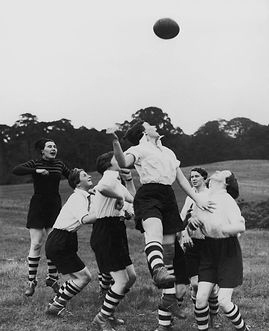
Preston ladies training in 1939

The England Women's team in 1997
